
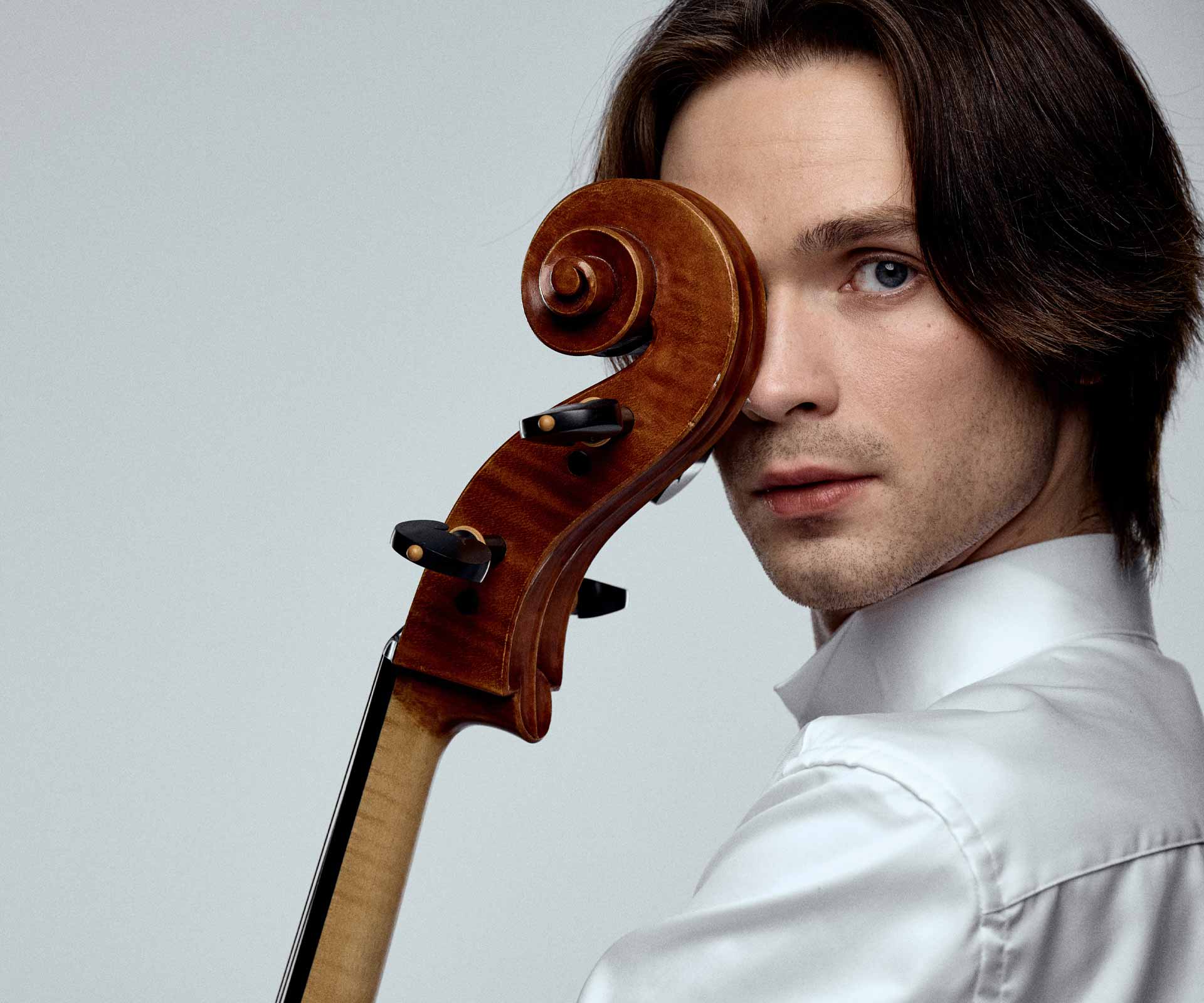
An award-winning Polish cellist based in New York, Emil Olejnik is pursuing a master’s degree at The Juilliard School where he previously earned his bachelor’s degree. During his time at The Juilliard School he has been studying under the illustrious tutelage of Natasha Brofsky, Nina Lee, Joel Krosnick, and Richard Aaron. Olejnik is a prize winner of more than twenty national and international competitions. Most notably he has been awarded Grand Prix at the ARS Lithuanica SummerFest in Vilnius, Lithuanian and a First Prize at the CEA Polish National Cello Competition in Warsaw. In 2018, Olejnik debuted in Poland with the Rzeszów Symphony Orchestra performing Tchaikovsky’s Rococo Variations, Op. 33. His international debut followed the next year with a performance of Haydn’s Cello Concerto No. 2 in D major with the Pazardzik Philharmonic Orchestra in Bulgaria. Most recently, he had the pleasure of performing the Dvořák Cello Concerto in B minor, Op. 104 with the Warmian-Masurian Symphony Orchestra. Olejnik is currently playing on a 1848 cello made by Jean Baptiste Vuillaume.
When not playing music, what are you up to?
Cooking for friends and family has always been my favourite way of spending time outside of a practice room or a concert hall. I love experimenting with different cuisines and finding ways to surprise my own taste buds. In many ways I feel like cooking and music making are similar activities. Both bring people together and encourage generosity and spontaneity.
We often hear people say they don’t listen to classical music or go to classical music concerts for fear of not “knowing anything about it” or “understanding it.” How would you respond to them? Are there works that you would recommend as an introduction to the classical music genre/chamber music genre?
Classical music is all about storytelling. It is a universal and extremely flexible communication medium that encourages a sense of discovery and passion. Not knowing a lot about it might as well be the biggest advantage when listening and experiencing it for the first time. Each audience member comes with memories, experiences, and feelings unique to who they are. These are the only tools we really need to be able to appreciate music. Every note and every phrase holds a multitude of meanings so each of us has a chance to experience a vastly different yet equally valid story. There are no objective truths to know before going into a concert. To paraphrase Mary Oliver [Pulitzer Prize-winning American poet]: Music offers itself to our imagination. We get to choose how we interact with it.
What piece of music, composer, or kind of repertoire are you hoping to explore this summer?
It is not often that we get to play with people who are equally devoted to chamber music. That is what makes this entire experience so beautiful! I’d be lucky to work on any piece as long as it is a celebration of music making and collaboration! Yet, if I were to choose one dream piece that I’d love to work on this year it would probably be Verklärte Nacht by Arnold Schoenberg. It is certainly one of the most intriguing and remarkable chamber music works. In this sextet young Schoenberg’s veracious intellect seamlessly blends with the reminiscence of late romantic traditions. Discovering it at Norfolk with the other Fellows would be an absolute privilege.
What do you think sets Norfolk apart from other Festivals?
There are many festivals in this country that deliver a very high calibre of performance and Norfolk Chamber Music Festival is certainly one of them. What makes Norfolk so special isn’t the performance aspect but the incredibly tight knit community of Fellows and faculty that encourages vulnerability and generosity in expressing oneself. Additionally, no other festival offers the opportunity to work with the Brentano Quartet in such a capacity allowing Fellows to be influenced and inspired by their incredible artistry, creativity, and humility for two weeks.
Do you find that your training and skills as a musician are helpful in the non-musical areas of your life? Would you share an example?
In my experience, learning about music and making music has always been all about the art of collaboration. Gaining an understanding of how to make art with people of different cultural and educational backgrounds translates seamlessly into my non-musical life. The ability to communicate with respect and intention has helped me shape and tend to many relationships in my life.
What are some of your long-term goals as a musician?
I have just graduated from The Juilliard School and it’s finally time for me to explore the world of music without the safety that the school offers. I’m excited to have full agency over my artistic freedom, and I can’t wait to see where it takes me. I’m also very happy to be continuing my work as a chamber musician in a trio this upcoming season with concerts all over the country. When it comes to my long-term goals, I think I want to focus on becoming an artist with an ability to bring communities together. I want to represent the world of classical music the way my mentors do — with grace, knowledge, humility and ferocity!